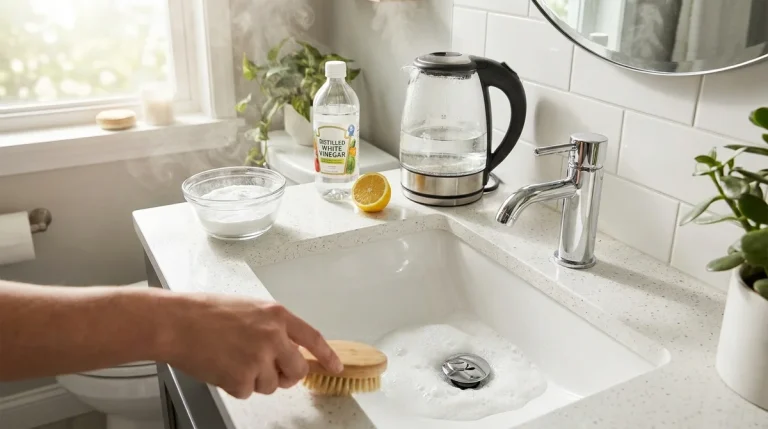

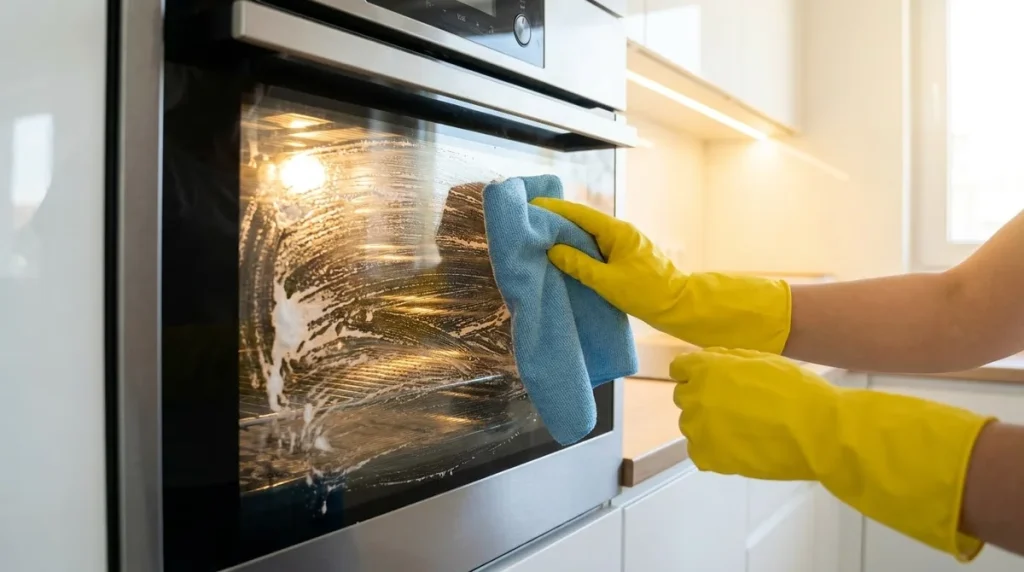
To clean an oven with baking soda, coat the inside with a paste of baking soda and water, leave it overnight, wipe it off with a damp cloth, then spray a little white vinegar on any white residue and wipe again. The paste softens baked-on grease so it lifts with very little scrubbing. It takes a few minutes to apply, a night to work, and about half an hour to clean off the next day.
Table of Contents8 sections
Before You Start: Safety and Your Oven’s Manual
Turn the oven off and let it cool completely before you start. For an electric oven, switch it off at the wall or the isolator switch as well. Never clean an oven while it is warm, and never mix cleaning products inside it.
Then check your oven’s manual, because some oven linings need different care. Three types are common:
- Standard enamel interiors are what this method is designed for.
- Self-cleaning (pyrolytic) ovens have their own high-heat cleaning cycle. Makers such as GE Appliances say not to use commercial oven cleaners in them, not to use scouring powders, and not to rub or clean the door gasket. Check the manual before using baking soda paste in one, and follow its cleaning advice first.
- Catalytic liners are rough-textured panels, often on the sides and back, that absorb grease and burn it off at high temperature. Many manuals say not to scrub them or put cleaners on them, so leave them out of this method.
What You Need
You need baking soda, water and white vinegar, which are cheap kitchen staples, plus rubber gloves, a spatula, damp cloths and an old towel.
| Item | Used for |
|---|---|
| — | — |
| Baking soda (bicarbonate of soda) | The cleaning paste |
| Water | Mixing the paste |
| White vinegar in a spray bottle | Lifting leftover residue |
| Rubber gloves | Protecting your hands from grease |
| Silicone or plastic spatula | Scraping without scratching |
| Damp cloths or sponges | Wiping off the paste |
| Old towel | Protecting the floor and the bath when soaking racks |
How to Clean the Inside of the Oven, Step by Step
Coat the inside with a baking soda paste in the evening so it can sit for around 12 hours, then wipe it off and treat any white residue with vinegar. This overnight method does most of the work for you.
- Remove the racks, shelves, thermometer and anything else loose inside the oven.
- Scrape off loose burnt bits from the base with a spatula.
- In a bowl, mix about half a cup of baking soda with a few tablespoons of water, adding a little at a time until you have a spreadable paste.
- Wearing gloves, spread the paste over the base, sides, back and inside of the door. Use more on heavily soiled areas. It will turn brown as it mixes with the grease.
- Keep the paste off the heating elements, the fan, the thermostat probe and any gas ports or burner holes. On a gas oven, take extra care around the openings where the flame comes through.
- Close the door and leave it overnight, or for at least 12 hours.
- The next day, wipe the paste off with a damp cloth, rinsing it often. Use the spatula for stubborn patches.
- Spray white vinegar over any white residue that remains. It foams as it reacts with the baking soda, which helps lift it.
- Wipe again with a clean damp cloth until no white film is left, then dry the surfaces.
Afterwards, heat the empty oven for a few minutes with the kitchen window open to dry it out before you cook.
How to Clean Oven Racks
Soak the racks separately while the paste works inside the oven. Lay an old towel in the bath to stop the racks scratching it, place the racks on top, and cover them with hot water and a good squeeze of washing-up liquid. Leave them for a few hours or overnight.
Scrub with a non-scratch scouring pad, rinse, and dry fully before putting them back. For heavily baked-on grime, sprinkle baking soda on the wet racks and scrub again.
How to Clean the Oven Door Glass
The inside of the door glass cleans well with the same paste. Spread a thin layer, leave it for 20 minutes or longer, then wipe it off and finish with a vinegar spray and a dry cloth for a streak-free shine.
Grease sometimes gets between the panes of glass. Some oven doors are designed to come apart for cleaning, and the manual explains how. If yours isn’t, leave it alone rather than prising the glass apart.
Wipe up spills as soon as the oven has cooled. A quick wipe of a fresh spill takes seconds, while the same spill baked on over weeks needs the overnight treatment.
What If the Baking Soda Won’t Come Off?
A white film that keeps coming back usually means there’s still baking soda on the surface. Spray more vinegar, wait a minute for the fizzing to stop, and wipe with a well-rinsed cloth. Changing to clean water often helps, because a dirty cloth just spreads the residue around.
For burnt-on patches that didn’t soften overnight, apply a second, thicker layer of paste just to those areas and leave it a few more hours.
Can You Clean an Oven Without Waiting Overnight?
Yes, though the result is lighter. Sprinkle baking soda over the dampened base, spray white vinegar over it, leave it for about 30 minutes, then wipe it away with warm, soapy water. This works for a light clean or a regular top-up between deep cleans, but heavy grease needs the longer method.
Safety Notes for Oven Cleaning
Baking soda and vinegar are gentle, but never mix them with other cleaners, rinse off old commercial cleaner before a self-clean cycle, keep children and pets away and call an engineer for faults or a gas smell:
- Don’t mix baking soda and vinegar with other cleaners in the oven. The CDC warns that mixing bleach with ammonia or other cleaners produces a poisonous gas.
- If you have used a commercial oven cleaner in the past, rinse away all traces before using the self-clean cycle. GE Appliances gives this advice for its self-clean ovens.
- Keep children and pets away while the oven is open and covered in paste.
- Call a qualified appliance engineer if you notice a damaged door seal, cracked glass, a faulty element, or, on a gas oven, a smell of gas. For a gas smell, also turn off the gas supply if you can do so safely, open windows, and contact your gas emergency service.