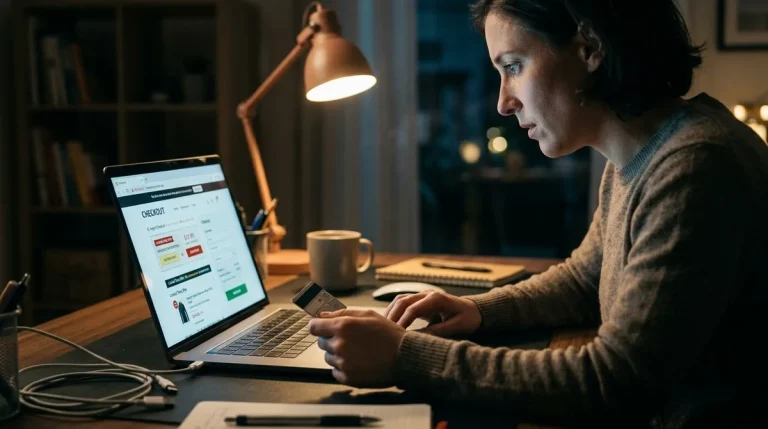

The quickest way to spot a counterfeit product online is to compare the price, the seller and the listing details against the brand’s official store. A price far below every trusted retailer, a seller with no clear address and blurry or copied photos are the most common warning signs.
Table of Contents6 sections
This page gives general consumer information. Rules on counterfeit goods differ by country, so check your local consumer agency for the rules where you live.
What Is a Counterfeit Product?
A counterfeit product is a fake that carries a brand’s name, logo or packaging without permission, so that buyers believe it is the real thing. Because it copies the brand’s trademark, it is different from a product that simply looks similar.
That difference matters. A “dupe” is a lookalike sold under its own name, for example a cheaper bag in a similar style with a different label. A counterfeit pretends to be the original brand. Dupes are often legal. Counterfeits are treated very differently: in the US, customs officers seize fake branded goods at the border, and in the UK, local Trading Standards teams investigate them.
Counterfeits turn up in many categories, including clothing, trainers, handbags, watches, perfume, make-up, electronics, chargers and toys.
Why Do Counterfeit Products Matter Beyond the Price?
Counterfeits matter because they can be unsafe, not just poor value. US Customs and Border Protection warns that fake cosmetics, shampoo and perfume may contain harmful substances, that fake medicines can be missing the right ingredients or contain dangerous drugs, and that counterfeit car parts such as airbags and brake pads can fail.
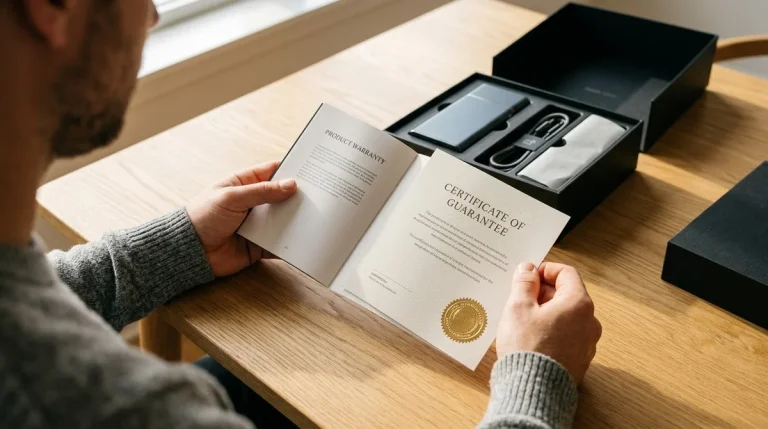
Counterfeits also come with no real support from the brand, so repairs and manufacturer warranties usually do not apply.
What Are the Warning Signs of a Fake Product Online?
The main warning signs show up in the price, the seller and the listing itself. One sign on its own is not proof, but several together are a strong hint.
| Warning sign | What it can look like |
|---|---|
| Price far too low | A new designer item at a fraction of the price charged by the brand and its usual retailers |
| Unclear seller | No business address, no phone number or only a web form for contact |
| Odd web address | A shop name or URL with a small misspelling of a known brand |
| Copied or poor photos | Stock images taken from the brand’s site, or blurry photos with no real details |
| Vague description | No model number, no materials and spelling or grammar mistakes |
| Strange reviews | Many short five-star reviews posted at the same time, or reviews for a different product |
| Unusual payment request | A request to pay by bank transfer, gift card or another method with little protection |
On marketplaces, the “sold by” line matters as much as the product page. A listing can sit on a well-known site while the actual seller is a third party with a short history.
How Can Shoppers Check a Product After It Arrives?
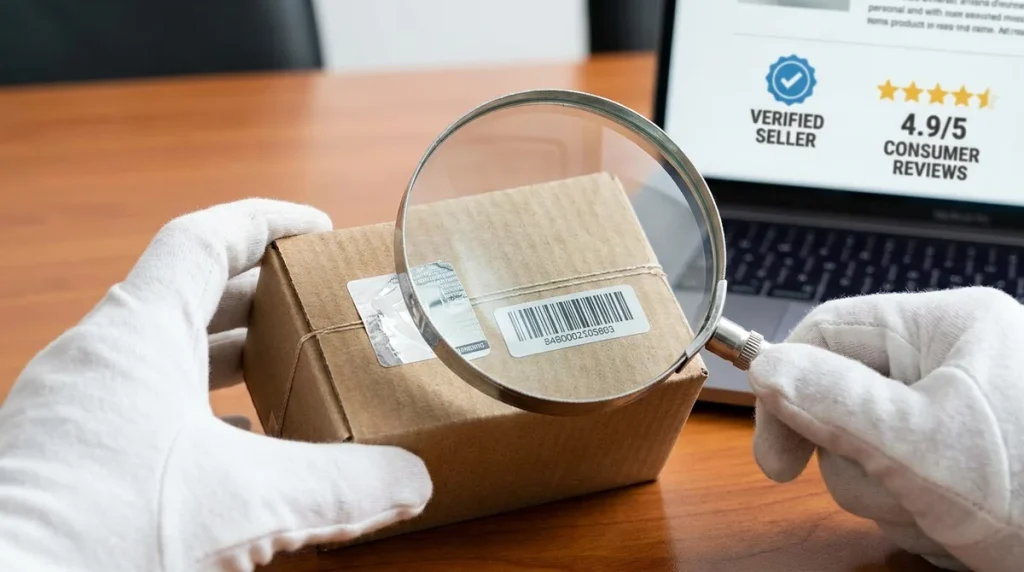
Once a parcel arrives, comparing it closely with the brand’s own photos and descriptions is the simplest check. Genuine products tend to be consistent in small details.
- Packaging: look for sharp printing, correct spelling and the same fonts and colours the brand uses.
- Labels and tags: check care labels, barcodes and any safety or certification marks.
- Serial numbers: some brands let owners check a serial number on their official website or through customer service.
- Build quality: compare stitching, weight, zips, hinges and finishes with the brand’s own descriptions.
- Smell and texture: for perfume and make-up, an unusual smell, colour or texture can be a warning sign.
If something looks wrong with cosmetics, skincare or electronics, many people choose not to use the item until its origin is clear, since safety is the main concern with these products.
Where Are Genuine Products Most Likely to Be Found?
Genuine products are most likely to come from the brand’s own website or shops and from retailers the brand lists as authorised. US Customs and Border Protection’s main advice is to buy from trusted, reputable sellers.
Many brands publish a list of authorised stockists on their websites. Checking that list before buying from an unfamiliar shop takes only a minute and removes most of the guesswork.
How Can Counterfeit Goods Be Reported?
Counterfeit goods can be reported to the marketplace where they were sold and to the authorities in each country. Reports help remove listings and track sellers, even when they do not lead to a refund.
- Marketplaces: most large platforms have a “report this listing” option for counterfeit items.
- United States: US Customs and Border Protection takes reports through its e-Allegations system, and the National Intellectual Property Rights Coordination Center, run by Homeland Security Investigations, has a referral form for counterfeiting.
- England: Citizens Advice explains that reports to Trading Standards go through the Citizens Advice consumer service, which passes them on.
- Wales, Scotland and Northern Ireland: GOV.UK lists Citizens Advice for England and Wales, Advice Direct Scotland and Consumerline in Northern Ireland as the consumer contacts.
- The brand itself: many brands have a page or email address for reporting fakes of their products.
For money already paid, the bank or card provider that handled the payment is usually the first contact, since each provider has its own dispute process and time limits. Rules differ by country, so the local consumer agency is the best place to confirm the right steps.