
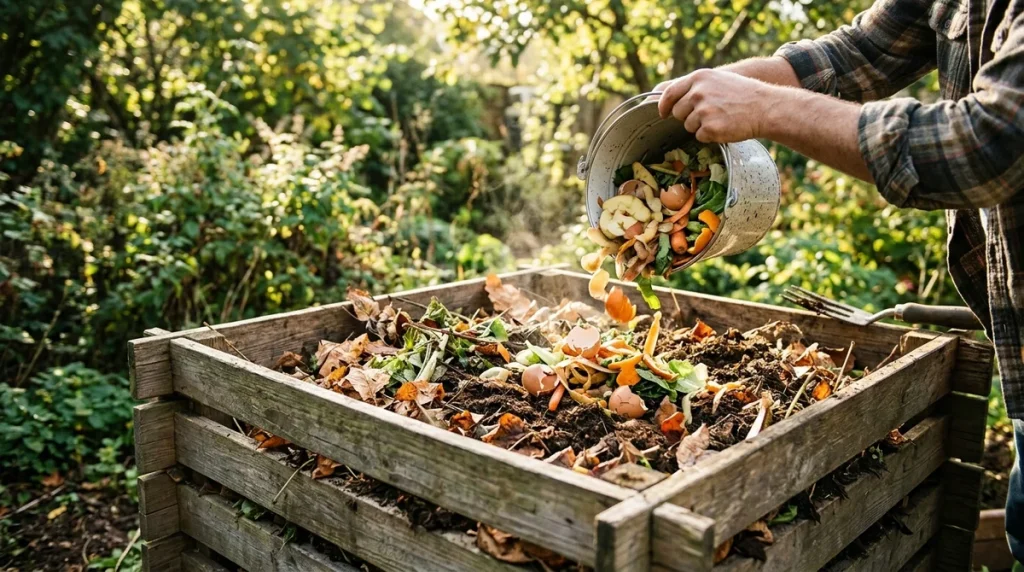
To start composting at home, pick a bin or a corner of the garden, then add layers of food and garden scraps (greens) and dry, carbon-rich material such as leaves and cardboard (browns), keeping it about as damp as a wrung-out sponge and turning it now and then. The US Environmental Protection Agency (EPA) says a well-maintained pile is typically ready in three to five months. You don’t need special equipment to begin.
Table of Contents9 sections
How Composting Works
Compost is what’s left when microorganisms break down plant material into a dark, crumbly soil improver. The EPA explains that these microbes need four things: carbon from browns, nitrogen from greens, water to digest the material and oxygen to breathe. Get the balance roughly right and the pile does the work by itself.
A busy pile also heats up as the microbes work. The EPA notes that a well-maintained pile can reach 130 to 160°F (about 54 to 71°C), which speeds up the process and helps break material down evenly.
Choose a Composting Method That Fits Your Space
The main options are an open pile, a closed compost bin, a tumbler or a worm bin, and the right setup depends on how much space and waste you have. These are the most common options:
| Method | Best for | What to know |
|---|---|---|
| — | — | — |
| Open pile or homemade bay | Large gardens with plenty of leaves and clippings | Cheapest option; needs space and occasional turning |
| Closed compost bin | Most gardens | Tidier, keeps heat and moisture in, fewer pests |
| Tumbler | Small gardens, people who want easy turning | Turned by rotating the drum |
| Worm bin (vermicomposting) | Flats and homes without a garden | Kept indoors or in a shed; handles food scraps only |
Before buying, check with your local council. Some sell discounted bins or offer food waste collections, and some housing associations and estates have rules about bins in shared spaces.
Where to Put a Compost Bin
Place the bin on bare soil in a well-drained spot, ideally near a water source, as the EPA suggests. Standing it on soil rather than paving lets worms and other soil life move in, and lets excess water drain away.
Pick somewhere easy to reach year-round, because a bin at the far end of a muddy garden tends to get ignored in winter. Partial shade helps stop the pile drying out in summer.
What Can You Compost? Greens and Browns
You can compost nitrogen-rich greens, such as fruit and vegetable scraps and grass clippings, and carbon-rich browns, such as dry leaves and shredded cardboard, and compost needs a mix of both. The EPA’s lists are a good starting point.
Greens (nitrogen-rich)
- Fruit and vegetable scraps
- Grass clippings
- Coffee grounds and paper filters
- Paper tea bags without staples
- Crushed eggshells
Browns (carbon-rich)
- Dry leaves
- Plant stalks and twigs
- Shredded plain paper and brown paper bags
- Shredded cardboard without tape, wax or glue
- Untreated wood chips
The EPA suggests adding at least two to three times as much browns as greens by volume, and covering food scraps with four to eight inches of dry browns. Keep a bag of dry leaves or shredded cardboard next to the bin so you always have browns to add.
What Not to Put in a Home Compost Bin
Keep meat, fish, dairy, fats, pet waste, diseased plants and treated wood out of a home bin, because some items attract pests, carry disease, or simply don’t break down there. The EPA advises keeping these out:
- Meat, fish and bones
- Cheese and other dairy products
- Fats, oils and grease, and large amounts of cooked food
- Pet waste and cat litter
- Diseased or pest-infested plants, and weeds that have gone to seed
- Plants treated with weedkiller
- Treated or painted wood
- Glossy paper, dryer lint and produce stickers
- Compostable cups, plates and bags, which home piles usually don’t get hot enough to break down
How to Start Your First Compost Pile
Starting a pile takes an hour or so: lay a base of bulky browns, alternate greens and browns, keep it damp and turn it every week or two. These steps follow the EPA’s backyard method.
- Collect kitchen scraps in a lidded caddy and empty it into the bin every few days.
- Lay a base of bulky browns, such as twigs and stalks, four to six inches deep. This helps air and water move through the pile.
- Add a layer of greens, then cover it with browns. Keep alternating as material builds up.
- Chop large or tough scraps into smaller pieces so they break down faster.
- Add water if the pile feels dry. It should feel like a wrung-out sponge.
- Turn or mix the pile every week or two with a garden fork to let air in.
Squeeze a handful of compost from the middle of the pile. A few drops of water means the moisture is right. Dripping means it’s too wet, and crumbling dust means it’s too dry.
How to Fix Common Compost Problems
Most compost problems come down to the balance of greens, browns, water and air. The EPA’s fixes are simple:
- It smells bad: too many greens or too wet. Add browns and turn the pile.
- It’s dry and nothing is happening: moisten it and turn it.
- It isn’t heating up: mix in more greens and turn it.
- Flies or pests: bury food scraps under a thick layer of browns, and check that no meat or dairy has gone in.
How Do You Know When Compost Is Ready?
Compost is ready when it looks dark, loose and crumbly and smells like fresh soil, which is how the EPA describes it. The pile should no longer heat up after mixing, and you shouldn’t be able to recognise the food scraps.
Let it sit for at least four weeks after it stops heating, which the EPA calls curing. Sieve out any lumps that haven’t broken down and put them back in the bin. Spread finished compost on flower beds and vegetable patches, or mix it into soil for planting.
Stay Safe When Handling Compost
Compost and potting mix are generally safe to handle, and the habits that help most are wearing gloves, keeping bags and dust away from your face and washing your hands afterwards. Health authorities such as NSW Health in Australia recommend wearing gloves, opening bags of compost or potting mix away from your face, dampening dry mix to keep dust down, and washing your hands with soap afterwards. Researchers writing in the CDC’s journal Emerging Infectious Diseases found that keeping unwashed hands away from your face after handling compost mattered most.
Take extra care if you have a lung or heart condition, or a weakened immune system, and talk to a doctor if you have concerns.